Characters
Norman Bartholomew
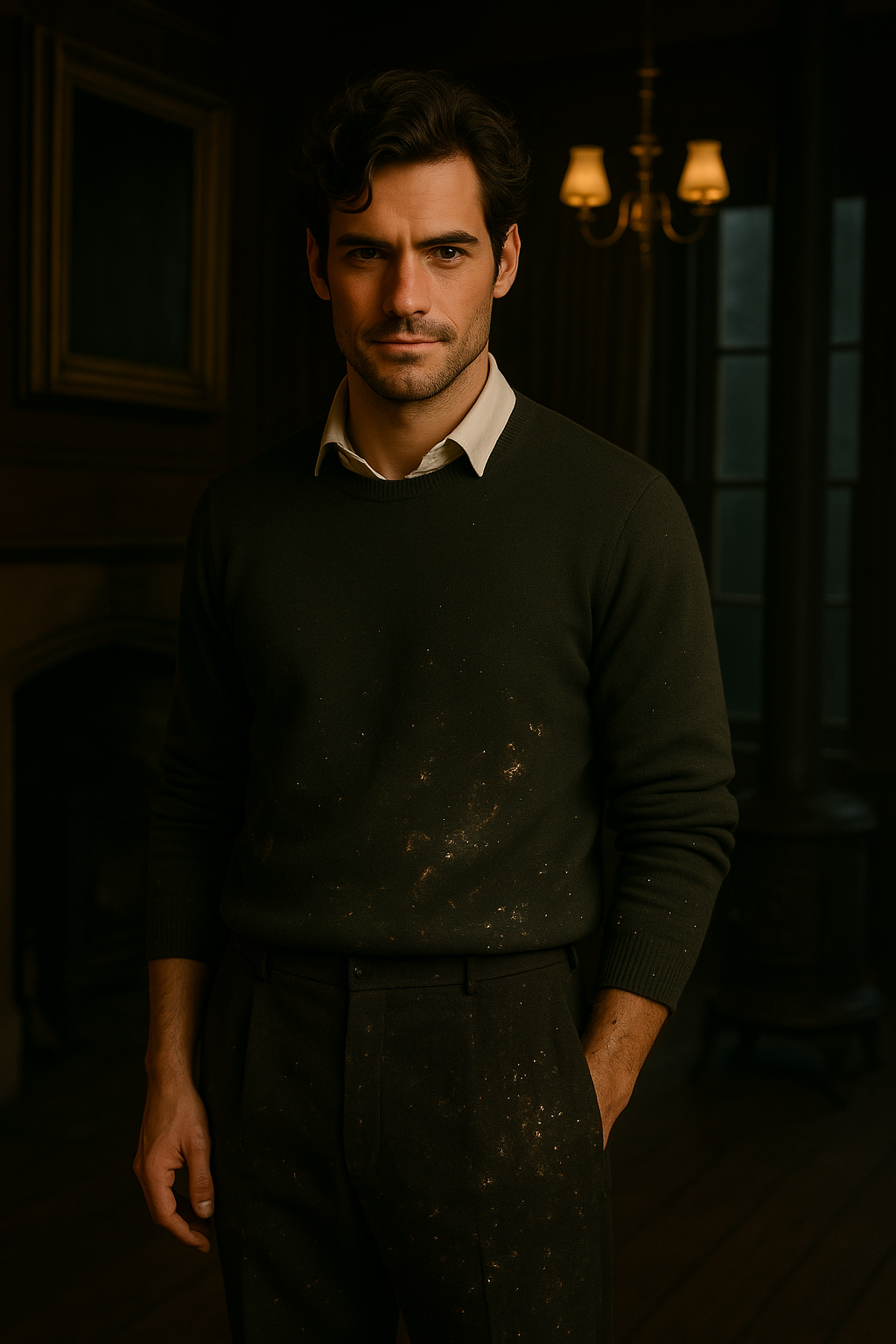
Handsome, charismatic, predatory, and dangerously charming, Norman exudes a self-assuredness that only a God complex could allow. He lives a parasitic, financially dependent lifestyle as a failed artist—funded by his accomplished surgeon wife, Elizabeth. Pushing forty and unable to secure fame with his derivative, mediocre paintings, Norman demands celebrity by any means necessary. Even an affair with his stunning mistress, Millie, isn’t enough to stroke his ego—though not for lack of trying. With dwindling prospects, he turns to disgraceful means.
Armed with an encyclopaedic knowledge of infamous killers, Norman’s envious fetish for their notoriety has reached a fever pitch. Staging their crimes no longer satisfies. As with any addiction, he must up the dose—deciding that the ultimate high he craves is to commit an actual murder. The real deal. In his distorted mind, executing the perfect crime is proof to God, the universe, et al., that he’s the formidable foe he believes himself to be—securing his place among the pantheon of the exceptional few. Naturally, his target is the one who sees him for the leech he truly is: his wife.
Still, Norman is no psychopath—though he fancies himself one, and performs as such when acting out their dastardly deeds. But when the stakes turn real, his carefully crafted façade collapses into a bumbling, hysterical mess—not the calculating adversary he imagined. As with all narcissists, Norman’s overinflated self-image far exceeds reality. And like his art, he lacks the talent and introspection to admit when his reach exceeds his grasp. The difference between presumptuous fantasy and the real world is a lesson Norman will be forced to learn the hard way.

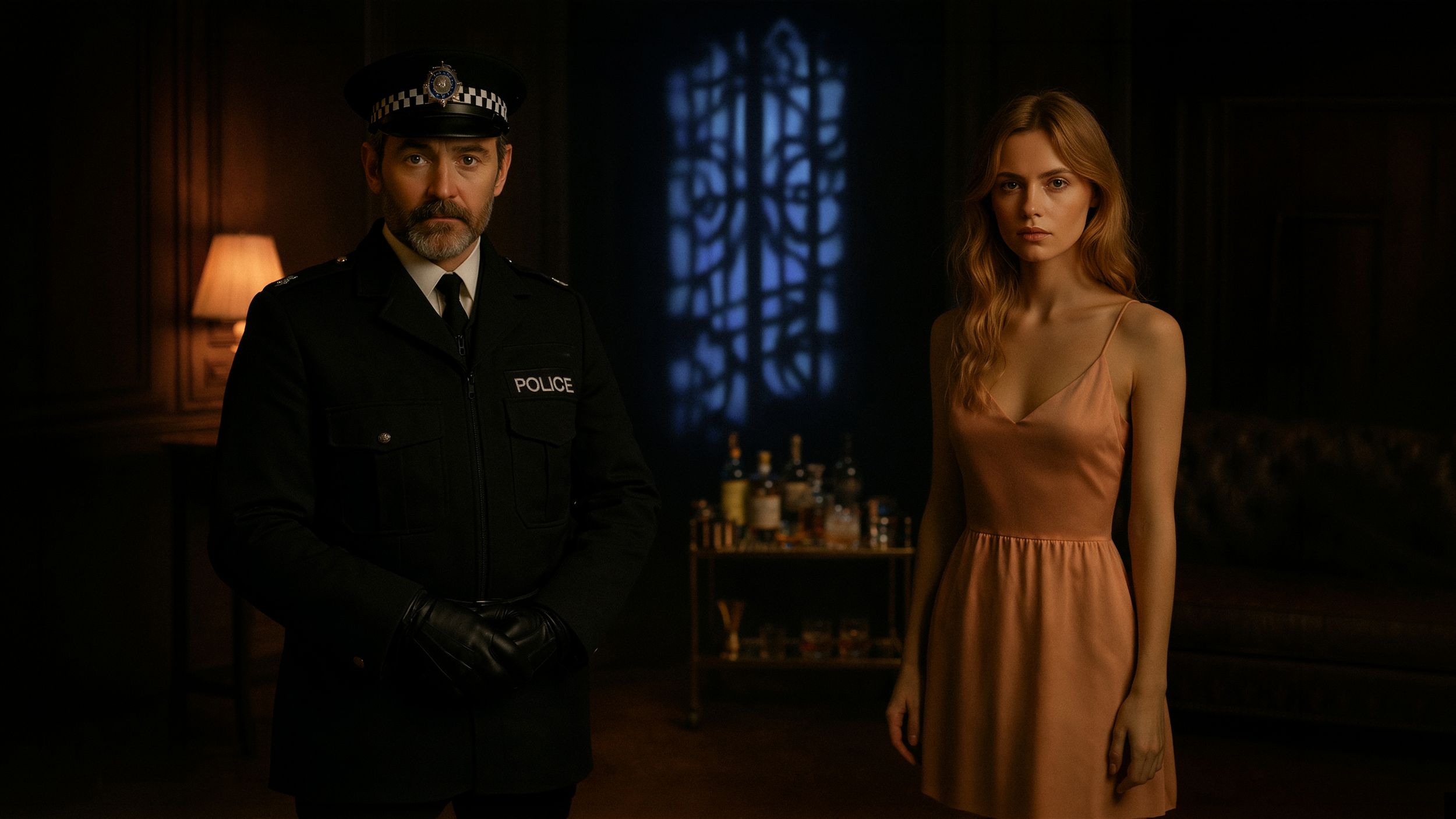
Elizabeth Bartholomew
She never wanted children—so God punished her with Norman. As a successful, career-focused surgeon, Elizabeth’s patience for her husband’s macabre fixations have long since worn thin. Once charmed by his rebellious hook, she now sees it for what it is: fraudulent, childish, and exhausting. Her intelligence renders her impatient by default.
As a successful surgeon on the right side of forty, she’s the household’s sole breadwinner. Thus she reserves the right to daggered glances, sharp candour, curt commands, and biting observations about Norman’s inadequacies—if he’d ever admit to any. She’s an artist in her own right, with backhanded insults as her medium of choice—“pathetic” being the latest addition to a vast swathe of pejoratives from her endless palette of colourful adjectives, routinely spattered in Norman’s direction. Alas, putting him in his place is but a temporary painkiller for a headache with a deeper root cause: marrying the potential he’ll never fulfil. Any effort to mould a wastrel into a husband has long been abandoned. Resentment expands the dark matter between them. Her solution? Workaholism. She buries herself in her practice—to advance, yes, but also to escape.
So why not just divorce Norman? Three reasons: image, money, and spite. Her reputation—along with the illusion of a functional marriage—is her chief export. Divorce would stain the persona she’s tirelessly forged. Also, as the only earner, she refuses to lose half her assets to an idle ex. And lastly, spite—of course she knows about Norman’s affair(s). She also knows he would love nothing more than to rut freely without consequence—and damned if she’s going to allow that. Their legal bond is her only leverage, and she refuses to hand over the hat-trick victory he doesn’t deserve.
If only her surgical talent were transferable to relationships—she’d dissect Norman without damaging the exposed vital organs of her marriage, then transplant a proper gentleman in his place. Perhaps, deep down, there lingers a flutter of nostalgia for their honeymoon phase, when his shenanigans still felt naughty and adventurous. Elizabeth grew up. Norman never will. And so they remain—hostages to each other, caught between what was and what will never be.


Millie Sykes
In her early twenties, she’s Norman’s drop-dead-gorgeous, naïve, and impressionable mistress—still high on the bad-boy supply that Elizabeth kicked from her system years ago (though the clock’s ticking). She works at the costumiers that Norman frequents when he's on the prowl for period-accurate role-play wardrobe. Objectified in his sick theatrics, Millie’s codependency and masochism manifest as blind loyalty to her tall, dark, bohemian crush. She mistakes obedience for romance and lacks the life experience to see through the rubbish.
Norman preys on the young and unformed—the kind of man who reminds women why they should have sown their wild oats. Millie, tragically, is still mid-lesson. It’s unfair to call her a bimbo, though her tolerance of Norman’s sometimes non-consensual “pranks” may suggest as much. More accurately, she’s a thrill-seeker with baggage and a broken compass. Sure, she aids the cliché of a broken-home runaway trying to retroactively fix daddy issues via inappropriate relationships with older men—but don’t mistake her naïveté for innocence. Millie’s no angel. She harbours her own hedonistic thirst: not as depraved as Norman’s, but enough to meet him halfway. These two were destined to spontaneously combust.
She knows dating a married man is playing with fire—but playing with fire is what heats her up. Various Cluster B personality quirks draw her to chaos, where she’s a willing participant. Proud of her role as a homewrecker, she sees Elizabeth as the obstruction to fully realising their dark fairy tale. With no use for men her own age and no adult responsibility, it’s all fun and games… until it isn’t.
Sergeant Stenning
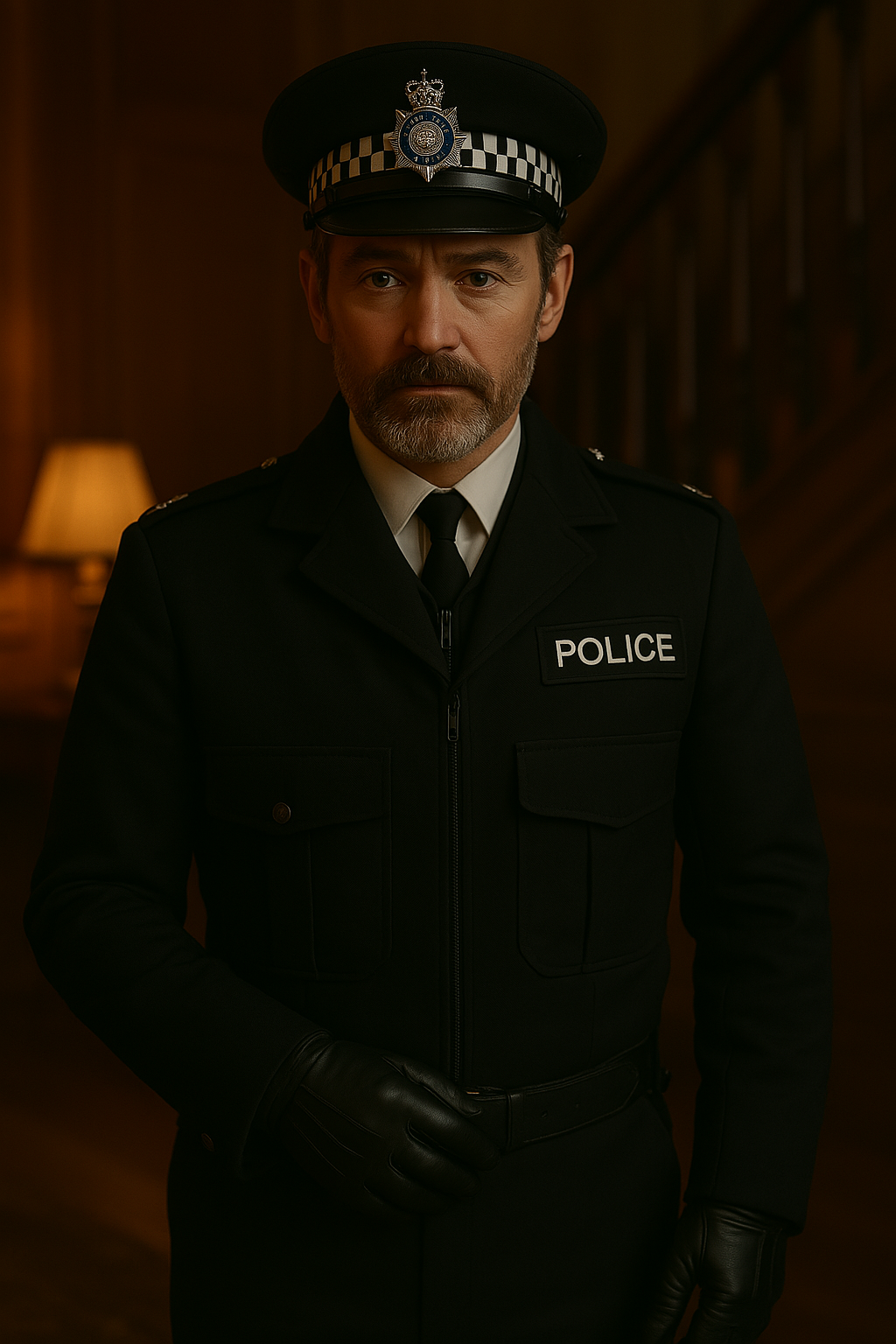
The much-needed ballast. He's a strait-laced, rock-solid inspector with a West Country accent—an antidote to the pathologies swirling around the Bartholomew abode. Always on the job, he’s a wry, perceptive, weathered officer in his late forties: broad-shouldered, stocky, and far more imposing than Norman in every way but ego. The kind of man you only underestimate once.
Stationed in Dorset, where rogue sheep top the crime sheet, his keen street smarts often lie idle. With a West Country accent, he wears his working-class grit beneath the badge and behind a modest, no-nonsense exterior. He always tries to remain impartial… until Norman trips a wire. A down-to-brass-tacks type, Stenning has little patience for professional bullshit artists. He sees through them quickly. The kind of sceptic who asks questions he already knows the answers to—just to read the responder’s body language. While suspects flail, Stenning is the audience’s anchor—their voice in the room. He lingers not out of rudeness, but strategy. He’s not here to outwit a genius. He’s here to sniff out a liar. And his intuition picks up on Norman’s scent from the outset—a muscle nearly atrophied, now flexing for the first time in years. Offsetting the displays of intellect from more talkative characters, Stenning takes the polar-opposite approach: piercing, pondering silence. His theory? The guilty have an urge to fill it. Give them enough rope—they’ll hang themselves.
To paraphrase Charlie Munger: Trust the man with a 130 IQ who thinks it’s 120. The guy with a 150 IQ who thinks it’s 170 will fail. Thus is Norman’s fatal flaw: underestimating Stenning—and wildly overestimating himself.